
Great-Granddaughter of Dr. Sensai Nagayo Visits Nagasaki University School of Medicine
On Tuesday, February 17, 2026, Ms. Watanabe, the great-granddaughter of Dr. Sensai Nagayo (1838–1902), the first director (head) of the Nagasaki Medical School—the predecessor of today’s Nagasaki University School of Medicine—visited our School of Medicine. The purpose of her visit was to gain a deeper understanding of Dr. Nagayo’s achievements and his contributions during his time in Nagasaki.
Dr. Nagayo was one of the students who attended the first systematic course of medical lectures in Japan, taught by Johannes L. C. Pompe van Meerdervoort (1829–1908), known as the “father of Western medical education in Japan,” at the West Office of the Nagasaki Magistrate’s Office.
The day Pompe began his medical training program—November 12, 1857 (Ansei 4, 9th month, 26th day)—is regarded as the birth of modern Western medical education in Japan and is now celebrated as the founding anniversary of the Nagasaki University School of Medicine.
The medical training later developed into the Sanitary Bureau (Yōjōsho) in 1861, followed by the establishment of the Medical Institute (Igakusho) for medical student education. Both institutions were integrated and reorganized into the Seitokukan in 1865. This organization later evolved into the Nagasaki Medical School Hospital, forming the foundation of today’s Nagasaki University School of Medicine.
Ms. Watanabe’s visit to the School of Medicine coincided with her visit to the special exhibition “Sensai Nagayo: Founder of Public Health,” held at the Omura City Historical Museum from January 20 to February 23, 2026.
She first toured the “Sensai Hall” and the “150th Anniversary Memorial Museum” located inside the Ryojun Kaikan. During the visit, she learned about Dr. Nagayo’s participation in the 1871 mission to observe medical education and public health systems in Europe and the United States, his appointment in 1873 as Director of the Medical Affairs Bureau of the Ministry of Education, and his creation of the Japanese term “eisei” (衛生) as the translation for “hygiene.” Ms. Watanabe shared that, during her UNICEF career in places such as Bangladesh, she had been involved in international public health activities and had keenly recognized the importance of sanitary environments—experiences that deepened her appreciation of her great-grandfather’s ideas.
She also visited the Medical Branch of the Nagasaki University Library, where she viewed precious historical materials such as the anatomical model “Kunstlék,” used by Pompe in his lectures, and lecture notes from the period—materials Dr. Nagayo may have used himself. These resources represent important cultural and educational heritage that reflects the long history of the School of Medicine.
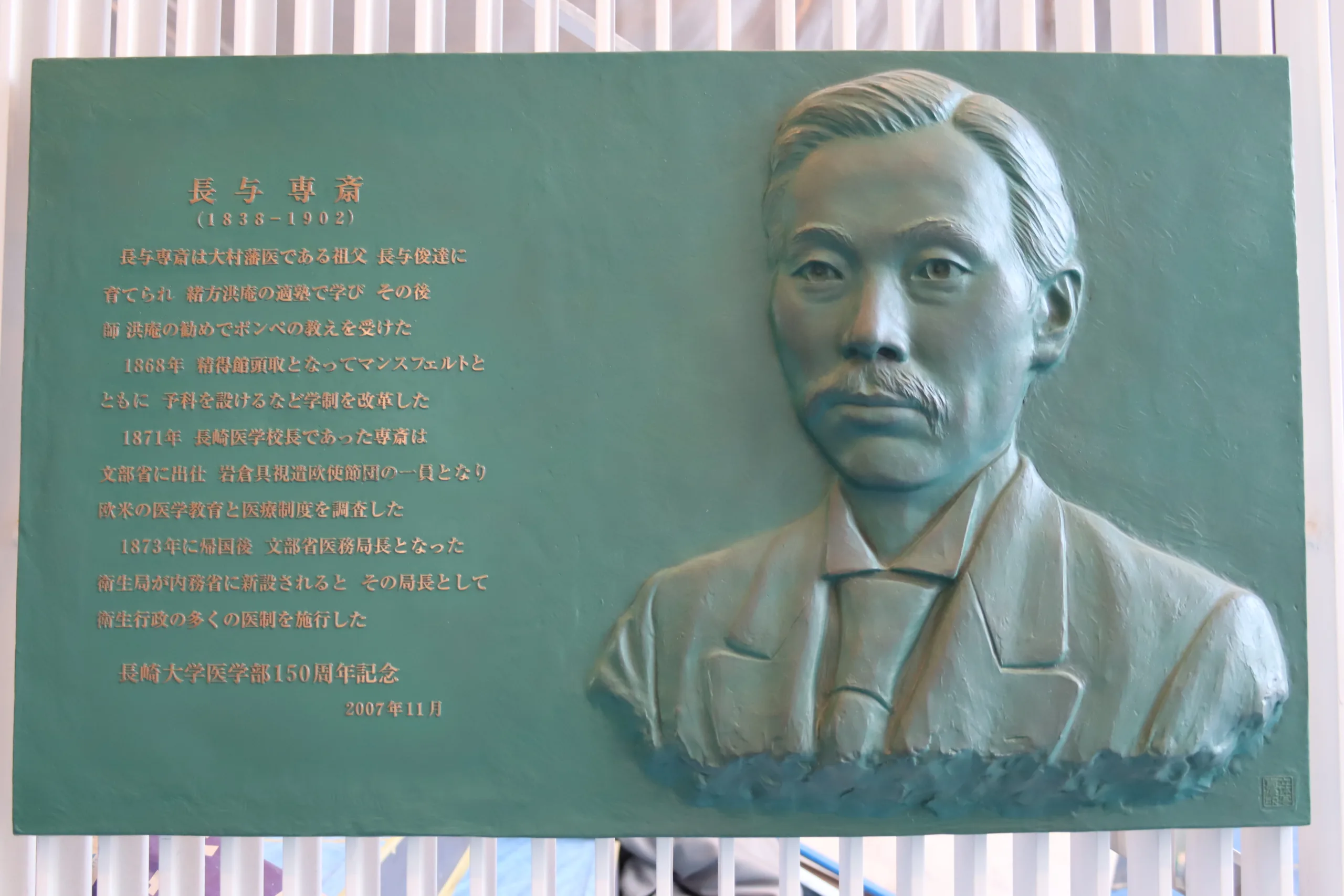
Relief of Dr. Sensai Nagayo in the Ryojun Kaikan
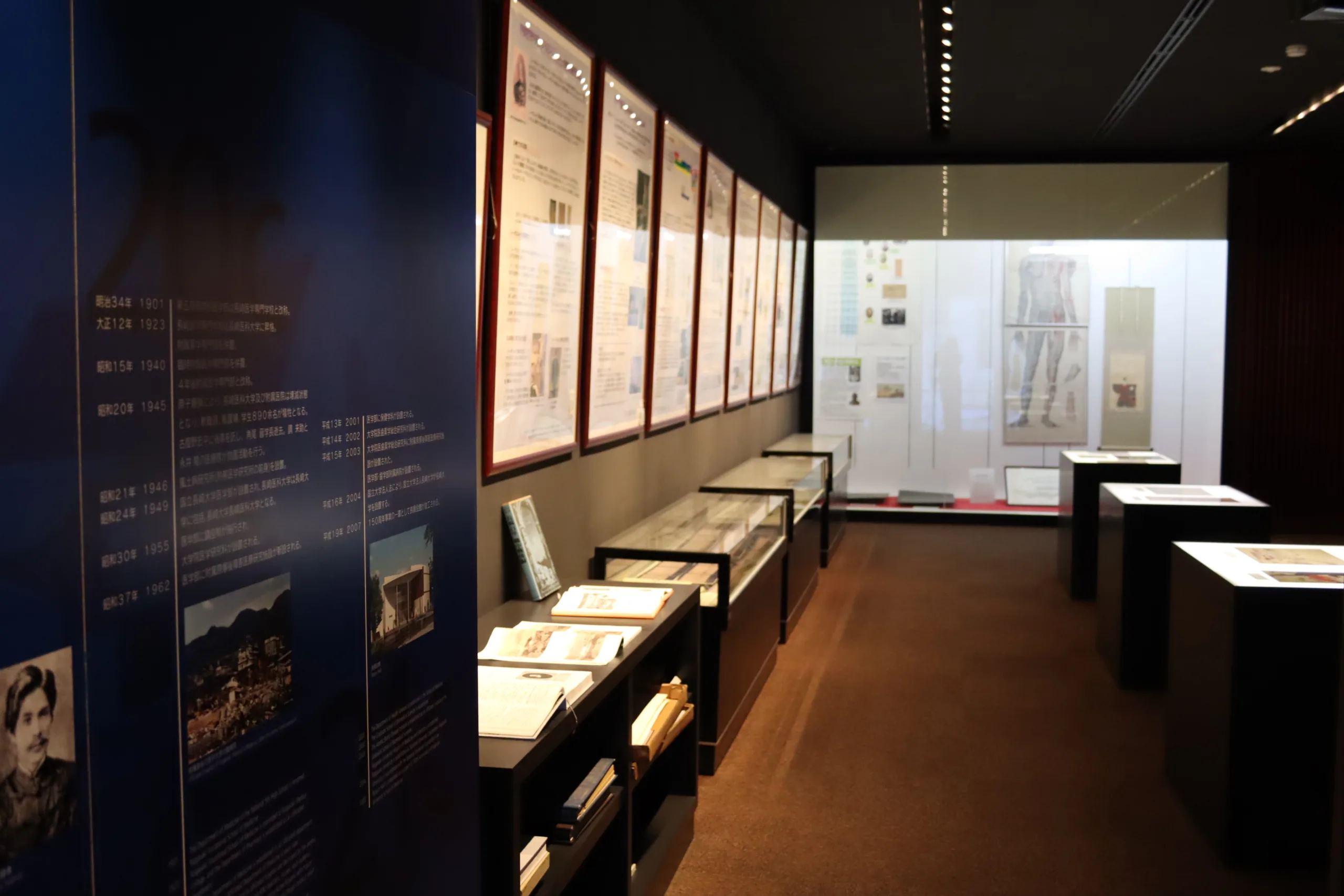
150th Anniversary Memorial Museum
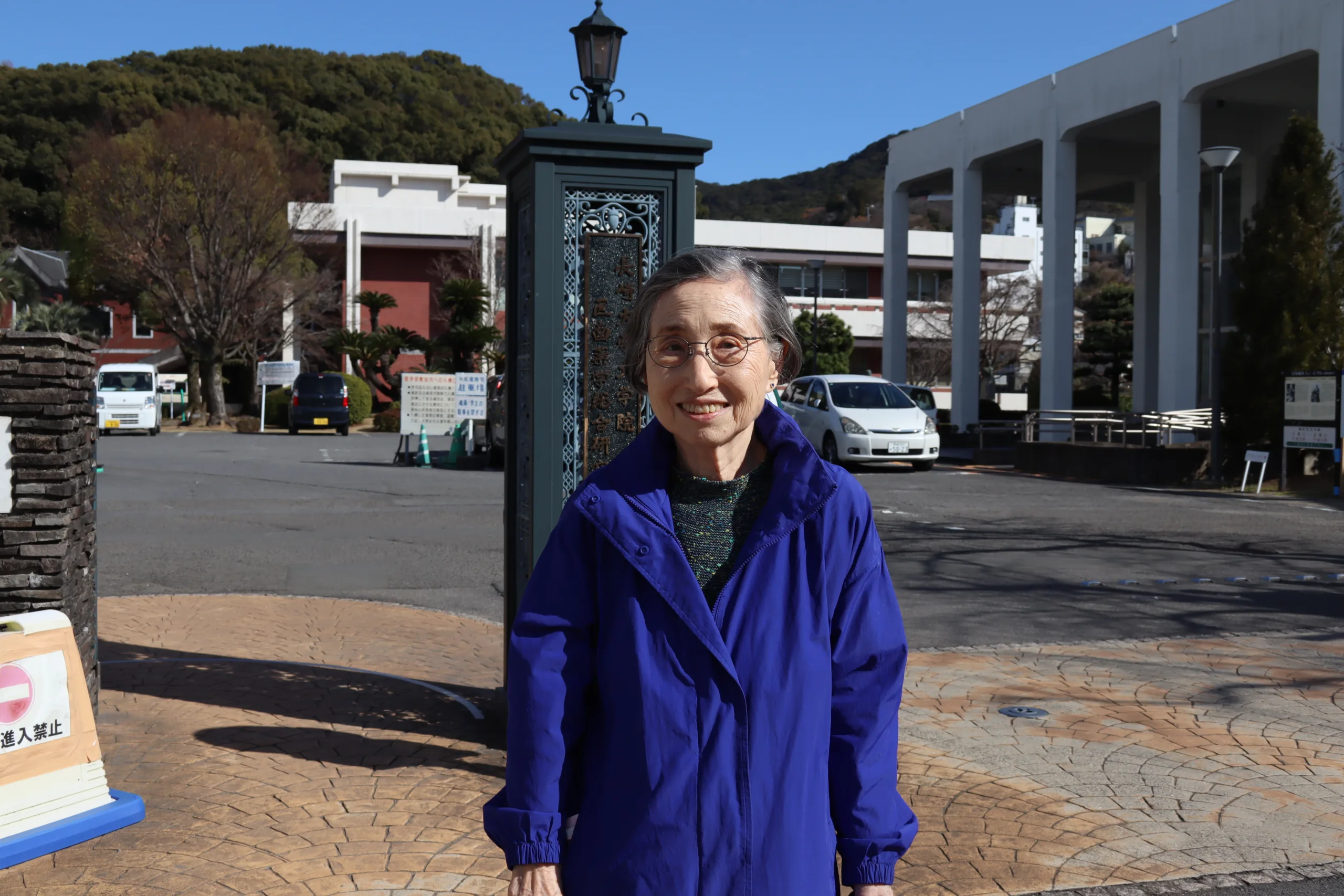
Ms. Watanabe, Great‑Granddaughter of Dr. Sensai Nagayo


