
Ariake Bay Identified as First Confirmed Nursery for Endangered Scalloped Hammerhead Shark in the Northwest Pacific— Evidence from 19-Year Study of 1,167 Individuals
“Although the sea is close to our daily lives, we rarely realize that it can play an important role on a global scale. Yet understanding the sea scientifically is the first step toward protecting the environment. Unraveling the ecology of long-lived sharks such as the scalloped hammerhead — species that undertake large and complex migrations between coastal and offshore waters — is challenging. In this study, by carefully examining sharks that had been caught as bycatch in fisheries and culling operations in different regions over many years, and by steadily accumulating data, we demonstrate for the first time that the Ariake Bay supports a globally important nursery for the scalloped hammerhead shark in the Northwest Pacific.
In Japan, sharks are often regarded as ‘troublesome’ animals, yet there is no scientific evidence showing that they are species that should be eradicated. Rather, as top predators in marine ecosystems, they play an essential role in maintaining ecological balance, including that of fisheries resources. If sharks disappear, the links in the food web are disrupted. As a result, ecosystem stability may gradually decline, potentially causing unexpected changes such as declines in certain fishery resources or increases in other species that may appear unrelated at first glance.
At the same time, our study revealed that juvenile sharks in the Ariake Bay are exposed to strong fishing pressure. Going forward, it will be important to work together with local fishers to reduce bycatch and promote appropriate release practices. In addition, to better understand migration routes and population connectivity across the Northwest Pacific—including Japan, Taiwan, and China—we hope to advance both domestic collaborations and international joint research.”
— Atsuko Yamaguchi
Researchers led by Professor Atsuko Yamaguchi of the Graduate School of Integrated Science and Technology at Nagasaki University have scientifically demonstrated that the Ariake Bay serves as an important nursery for the scalloped hammerhead shark (Sphyrna lewini). This study provides the first scientific confirmation of such a nursery in the Northwest Pacific.
Analysis of 1,167 individuals collected between 2006 and 2024 revealed that newborn sharks are recorded in the Ariake Bay every year, and that individuals aged 0 years account for the majority of sharks found in the inner part of the bay. These findings show that the area satisfies internationally recognized criteria for shark nursery grounds. The study also suggests that the brackish environment of the inner Ariake Bay, characterized by high turbidity, moderate salinity, and extensive tidal flats formed under Japan’s largest tidal tange, contributes to the survival of juvenile sharks. At the same time, it is estimated that approximately 4,800–16,000 juveniles may be caught as bycatch each year, highlighting the importance of environmental conservation and appropriate fisheries management in the nursery area.
・First identification of a nursery ground for the scalloped hammerhead shark (Sphyrna lewini) in the Northwest Pacific based on scientific criteria
・Analysis of 1,167 individuals collected from four areas in southwestern Japan between 2006 and 2024 showed that newborn sharks appear every year in the Ariake Bay, and individuals aged 0 years account for 88% of sharks in the inner bay
・Newborn sharks with open umbilical scars were found only in the Ariake Bay and Tachibana Bay, suggesting that parturition occurs from the entrance to the inner area of the Ariake Bay
・Juveniles remain in the Ariake Bay nursery for up to two years
・The highly turbid, moderately saline brackish environment in the inner Ariake Bay may limit the entry of large predators while providing favorable feeding conditions for juveniles
・An estimated 4,800–16,000 juvenile sharks are caught annually as bycatch in the Ariake Bay, suggesting that the number of births may exceed that reported for the well-known nursery in Hawaii (about 7,000 per year)
・The Ariake Bay is likely an important nursery for scalloped hammerhead sharks on a global scale, and conservation of the brackish environment in the inner Ariake Bay together with appropriate fisheries management is essential for the species’ protection
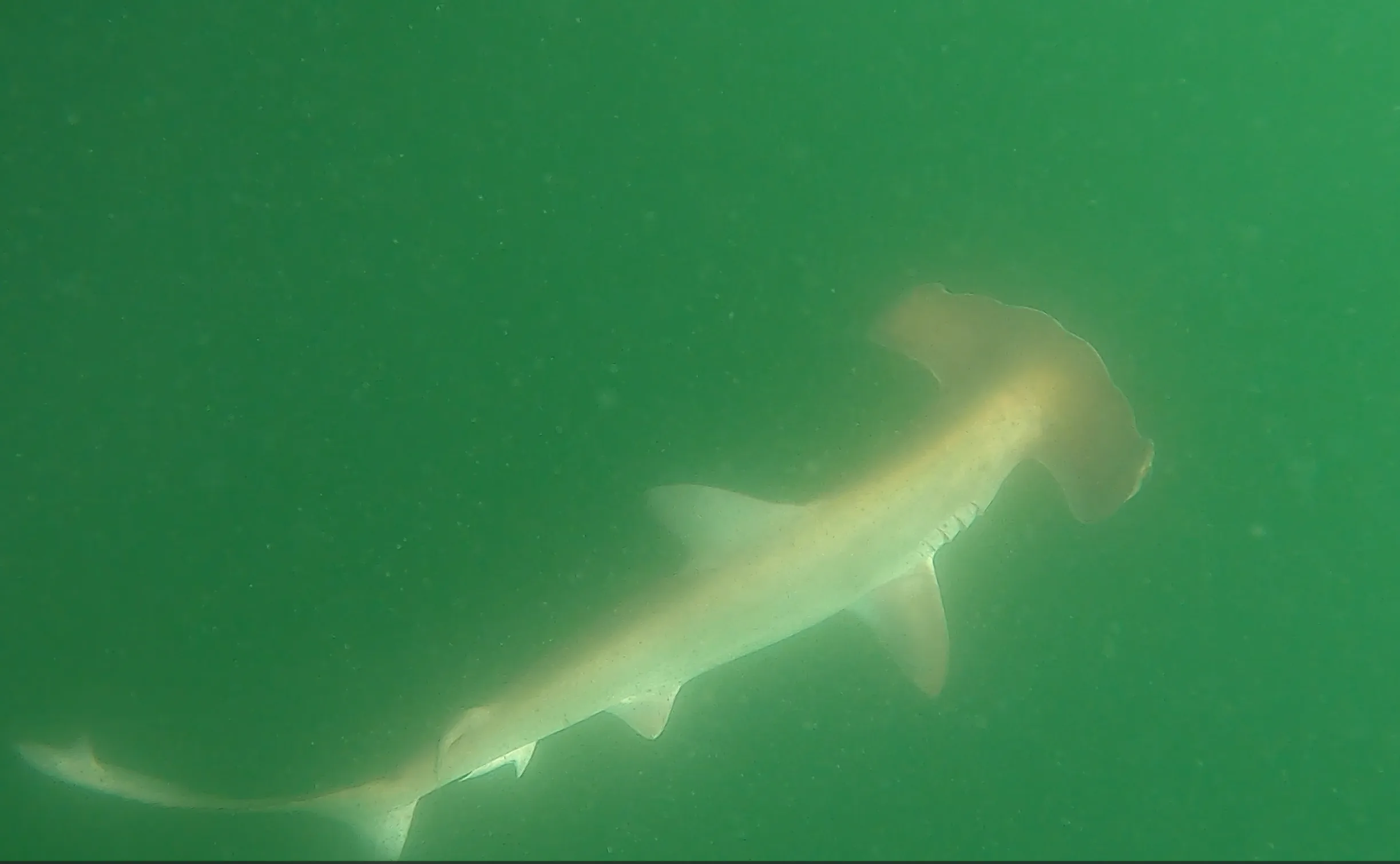
Figure 1 Juvenile scalloped hammerhead shark swimming in the turbid waters of the inner Ariake Bay
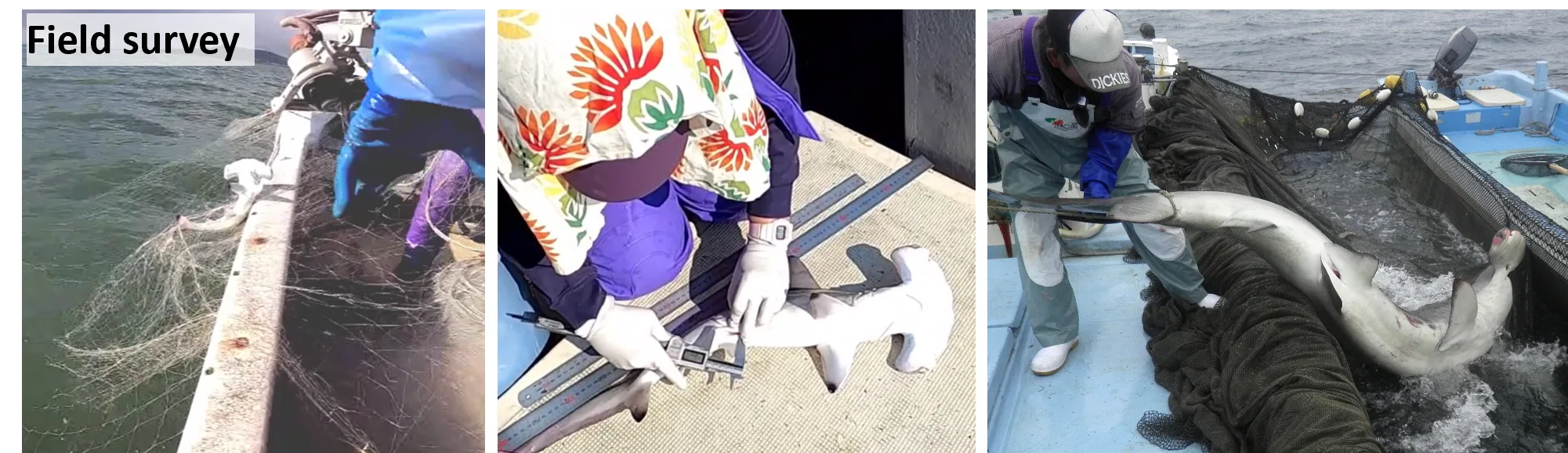
Figure 2 Juvenile caught in a gill net in the Ariake Bay (left), measurement of a juvenile onboard a vessel (center), and an adult captured in a set net west of Kyushu (right).
Modified from Yamaguchi et al. (2026).
Identifying and protecting coastal “nursery grounds,” where juvenile sharks grow before joining the adult population, is critical for shark conservation. However, coastal ecosystems worldwide are increasingly degraded by human activities such as coastal development and fishing, and the loss of nursery habitats threatens marine biodiversity. Recent international biodiversity frameworks, including the Kunming–Montreal Global Biodiversity Framework (e.g., the “30 by 30” target), emphasize the identification and protection of biologically important marine areas.
The scalloped hammerhead shark (Sphyrna lewini) is widely distributed in tropical and temperate waters around the world. Because the species matures slowly and has relatively low reproductive output, it is particularly vulnerable to fishing pressure. As a result, global populations have declined significantly, and the species is classified as Critically Endangered (CR) on the IUCN Red List.
Although nursery areas have been reported in regions such as the Americas and Australia, none had previously been scientifically confirmed in the Northwest Pacific, including waters around Japan.
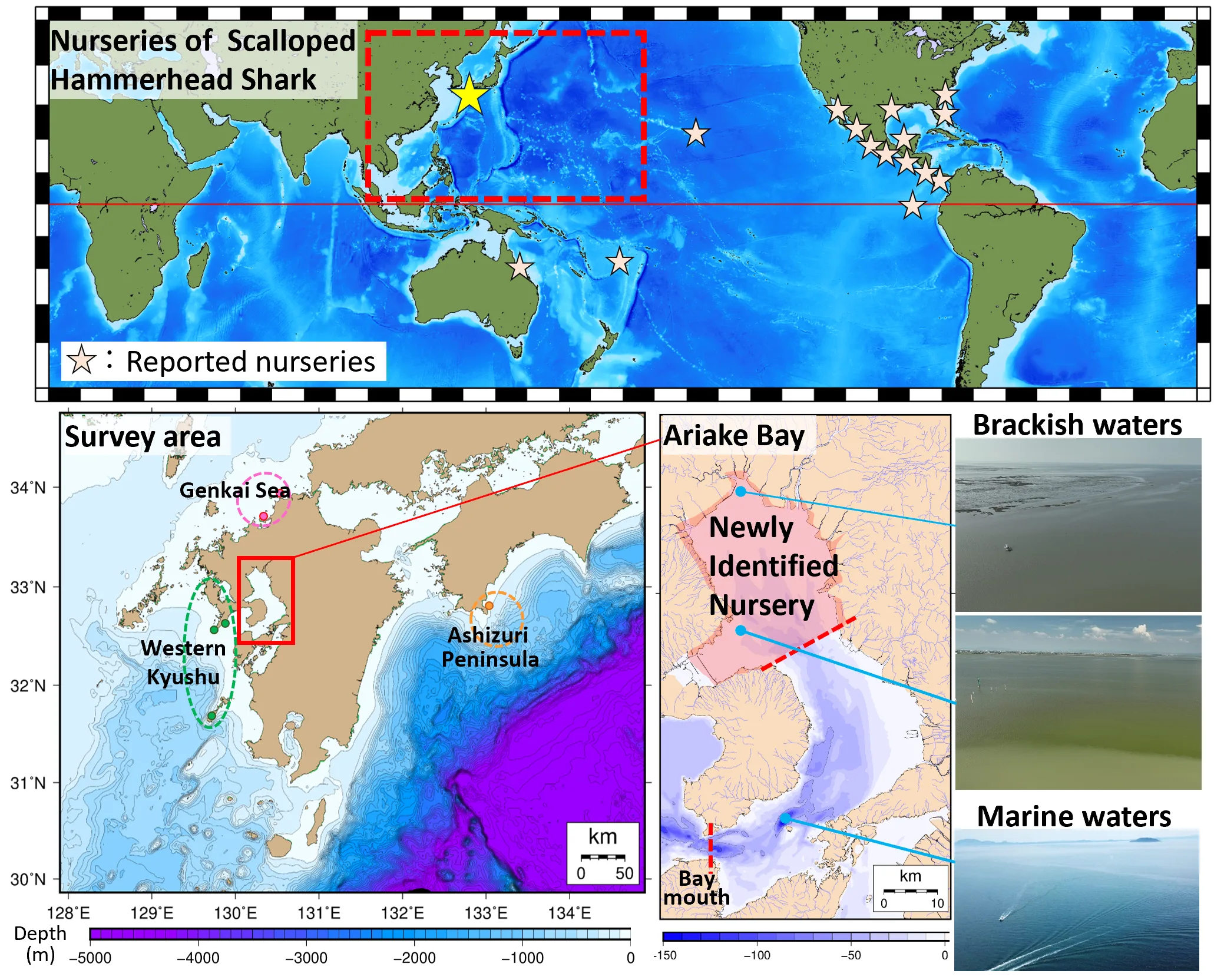
Figure 3 Known nursery areas of the scalloped hammerhead shark worldwide (top) and the study area in this research (bottom).
Modified from Yamaguchi et al. (2026).
The research team analyzed 1,167 scalloped hammerhead sharks caught as bycatch between 2006 and 2024 in four areas of southwestern Japan: the Ariake Bay, the west coast of Kyushu, the Genkai Sea, and waters around Cape Ashizuri.
The study evaluated three criteria commonly used to define shark nursery areas (Heupel et al., 2007):
1.Newborn sharks occur more frequently in the area than in other regions
2.Juveniles remain in the area for extended periods
3.The area is used repeatedly across multiple years
To assess the nursery function of the inner Ariake Bay, the researchers integrated multiple datasets, including spatial and seasonal occurrence patterns, identification of newborn individuals based on the healing stage of umbilical scars, age estimation from vertebral centra, nutritional condition of age-0 sharks (condition factor and hepatosomatic index), water temperature and salinity at capture, and bycatch estimates from a stingray control program.
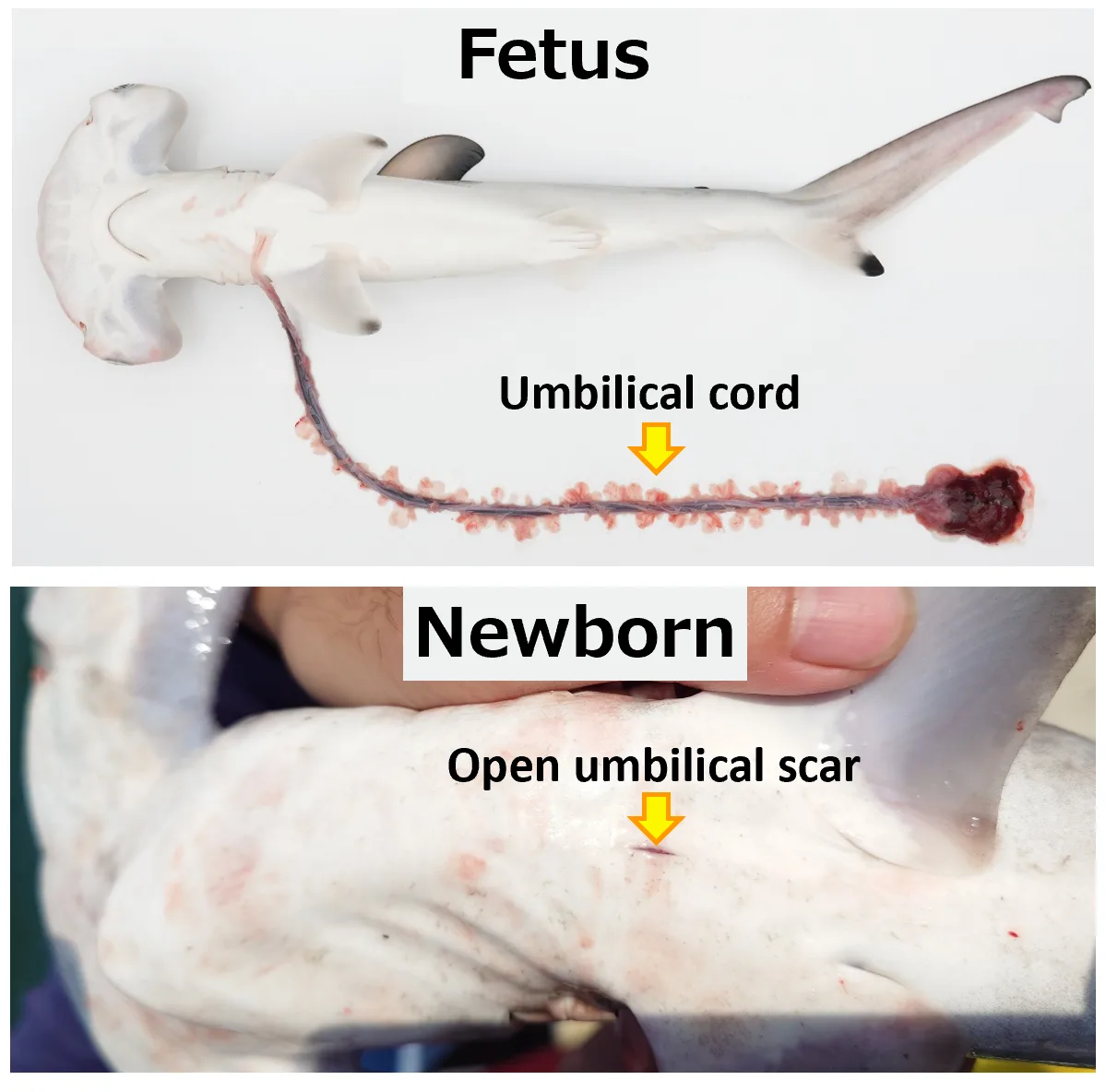
Figure 4 Scalloped hammerhead shark embryo and a newborn with an unhealed, open umbilical scar.
Modified from Yamaguchi et al. (2026).
1. The inner Ariake Bay meets the scientific definition of a shark nursery
Newborn sharks with open umbilical scars were found only in the Ariake Bay and Tachibana Bay, with the highest frequency in the Ariake Bay. While some individuals moved out of the bay after three to six months, others remained for up to two years. Age-0 individuals were recorded every year over a 19-year period, indicating consistent and repeated use of the area. These findings demonstrate that the shallow waters of the inner Ariake Bay function as a critical nursery according to scientific criteria.
2. Habitat use differs by growth stage
・Inner Ariake Bay: dominated by age-0 juveniles; large individuals rarely appear
・Bay entrance: presence of large mature males over 10 years old
・Tachibana Bay and the Genkai Sea: areas used by juveniles that have left the Ariake Bay
・Waters around Cape Ashizuri: intermediate-sized individuals at subadult stages
These patterns suggest that scalloped hammerhead sharks use different marine areas in southwestern Japan according to their life stage. The Ariake Bay likely functions as a birth and nursery ground, while Pacific coastal areas may serve as migration habitats for several years before maturation.
3. Brackish environmental conditions play a key role
・Salinity measured where age-0 sharks were captured ranged from 25.9 to 32.8, whereas individuals older than one year were typically captured in waters with higher salinity (generally above 30). Although turbidity was not directly measured during capture, the inner Ariake Bay is known for its extremely turbid waters compared with other enclosed bays.
・In addition, stomach contents of mature males collected near the bay entrance contained newborn sharks. These findings suggest that the moderately saline environment may limit the intrusion of large predators, thereby reducing predation risk for juveniles. The results also indicate that the ability of newborn sharks to quickly move into the inner bay may influence their survival.
4. The inner Ariake Bay provides favorable nursery conditions
・Newborn sharks showed high empty-stomach rates, suggesting that they may initially rely on energy reserves derived from the mother.
・Indicators of nutritional condition further suggest that the feeding environment in the Ariake Bay nursery may be more favorable than that reported for the nursery in Hawaii.
5. Large numbers of juveniles are caught as bycatch
・Data from a stingray control program estimated that between 4,837 and 16,115 juvenile sharks (average 9,761) are caught annually.
・Additional bycatch in commercial fisheries suggests that the actual number of captured juveniles may be even higher.
This study identifies the Ariake Bay as the first scientifically confirmed nursery ground for the scalloped hammerhead shark in the Northwest Pacific, providing important scientific evidence for the conservation of this declining species at both regional and global scales.
The nursery likely functions as part of a broader ecological network that includes the Pacific coast of Japan and Taiwan through migration and genetic connectivity. Future research will investigate migration routes and population structure through international collaboration.
The findings also highlight the importance of maintaining and restoring the extensive brackish ecosystem of the inner Ariake Bay, including tidal flats and watershed management.
As a top predator in the Ariake Bay ecosystem, the scalloped hammerhead shark is increasingly recognized as playing a crucial ecological role. Improving our understanding of its biology will contribute not only to regional ecosystem conservation but also to the development of global conservation and management strategies for this species.
Journal: Global Ecology and Conservation
Title: Ecological function of the Ariake Bay as a scalloped hammerhead shark (Sphyrna lewini) nursery in the northwestern Pacific
Authors: Atsuko Yamaguchiᵃ, Yoshimi Oginoᵃ, Kojiro Haraᵃ, Masayuki Nakamuraᵇ, Mao Watanabeᶜ, Keisuke Furumitsuᵃ
ᵃ Graduate School of Integrated Science and Technology, Nagasaki University
ᵇ Marine World Uminonakamichi
ᶜ Tosashimizu Fisheries Guidance Office, Fisheries Promotion Department, Kochi Prefecture
DOI: 10.1016/j.gecco.2026.e04127
For more details, please refer to the full article published in Global Ecology and Conservation.
This study was conducted with the long-term cooperation of fisheries stakeholders, market personnel in various regions, and members of the Marine Zoology Laboratory at the Faculty of Fisheries, Nagasaki University. The research was supported by Grants-in-Aid for Scientific Research from the Ministry of Education, Culture, Sports, Science and Technology (MEXT) and the Japan Society for the Promotion of Science (JSPS), including Grant-in-Aid for Scientific Research (B) (No. 23380112, 19H02977), Grant-in-Aid for Scientific Research (C) (No. 20580205), and Challenging Exploratory Research (No. 26660161). Additional support was provided by the Environmental Research and Technology Development Fund of the Ministry of the Environment and the Environmental Restoration and Conservation Agency of Japan (JPMEERF20221003, JPMEERF24S12303).


